Calendly booking tracking lets you see exactly which marketing campaigns generate your most valuable meetings. The Pimms dashboard has an interactive setup wizard that configures the integration in a few clicks — one-click OAuth, no scripts, no webhooks.
You'll get real-time booking attribution showing which ads, email campaigns, LinkedIn outreach, or YouTube posts drive meetings. Perfect for B2B lead tracking with complete meeting attribution from first click to booked appointment.
Calendly is one of the easiest integrations to set up with Pimms. Because it uses OAuth, there are no scripts to install and no webhooks to configure — just connect your account and start tracking.
Why track Calendly bookings with Pimms?
-
Prove which outreach actually books meetings. You're running LinkedIn ads, sending cold emails, and posting on Twitter — all pointing to your Calendly link. Without Pimms, you see 20 bookings this week but have no idea where they came from. With Pimms, each booking shows exactly which campaign drove it.
-
Optimize your ad spend on meeting generation. You spend $1,000/month on Google Ads and $500 on Facebook, both driving traffic to your Calendly. Pimms shows you that Google Ads generated 15 bookings while Facebook only brought 3 — so you can reallocate your budget where it matters.
-
Compare sales reps and campaigns side by side. Create separate Pimms links for each sales rep or campaign. See at a glance who books the most meetings and from which channels — making performance reviews data-driven instead of anecdotal.
Prerequisites
- A Calendly paid plan (Standard or higher — required for the OAuth integration)
- A Pimms account (sign up here)
- At least one Calendly event type set up
What you'll track
- Calendly bookings — Every scheduled meeting from all your event types, with attendee details
- Meeting attribution by campaign — Which ad, email, social post, or outreach message drove each booking
- Campaign performance — Conversion rates and booking counts broken down by traffic source
- Time-to-book — See when visitors click and when they actually book to understand your sales cycle
How to set it up
Go to your Pimms dashboard, open Integrations → Calendly, and launch the setup wizard. One-click OAuth connects your Calendly account instantly — no scripts or webhooks needed. The entire setup takes under 2 minutes.
What the setup wizard covers
The Calendly wizard has 3 steps:
- Connect Calendly — One-click OAuth (requires Calendly paid plan)
- Create a test link — Generate a test tracking link to your Calendly booking page
- Verify tracking works — Book a test meeting to confirm attribution is working
How it works
- Create a Pimms link pointing to your Calendly booking page (e.g.
pim.ms/book-a-call) - Share that link in your campaigns — LinkedIn posts, email outreach, paid ads, YouTube descriptions
- A visitor clicks, lands on your Calendly page, and books a meeting
- Pimms attributes the booking to the exact campaign that brought them — visible instantly in your dashboard
Because Calendly uses OAuth, Pimms receives booking events directly from Calendly's API with no middleware needed.
Best ways to share your tracking links
- LinkedIn posts and DMs — Replace your raw Calendly link with a Pimms link to track which LinkedIn activity books meetings
- Cold email campaigns — Use a Pimms link in your email signature or CTA to measure outreach effectiveness
- Paid ads — Point your ad destination to a Pimms link for your Calendly page to see which ads generate meetings
- Website CTAs — Use tracked links on your "Book a demo" buttons to know which pages convert visitors into meetings
- YouTube and podcast show notes — Add a Pimms link in your video descriptions to track content-driven bookings
What you'll see in your dashboard
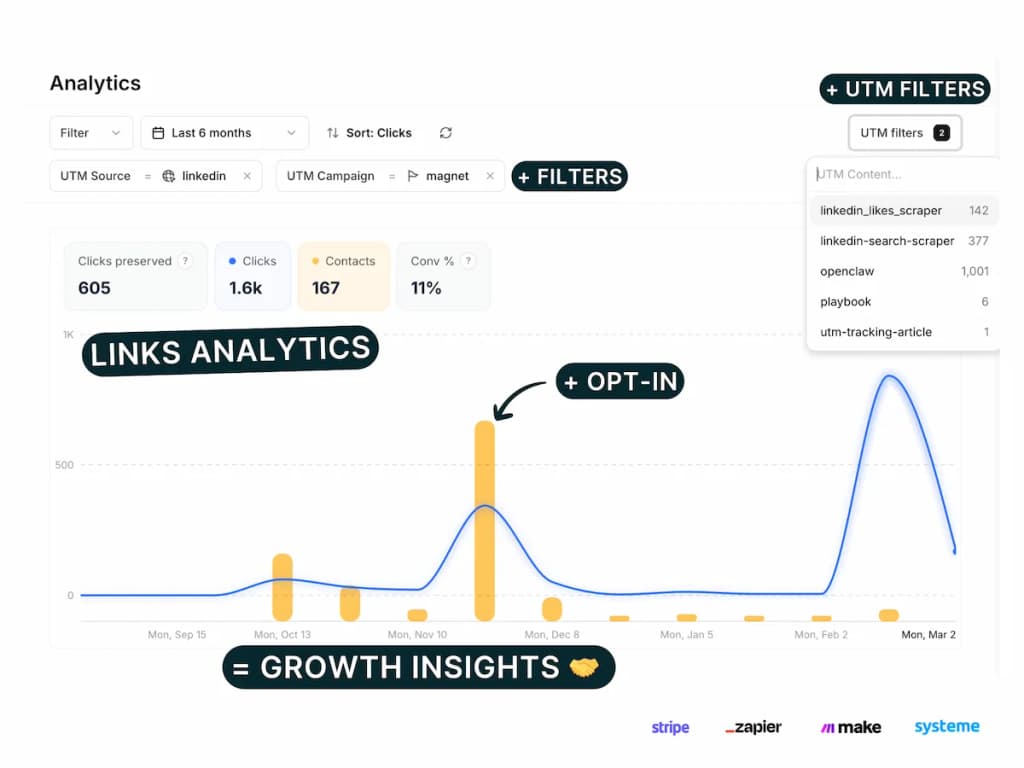
Your Pimms dashboard shows every Calendly booking in real time with full campaign attribution. For each meeting, you'll see the attendee's name and email, the event type, and the complete trail — which Pimms link they clicked, from which platform, and which campaign. Filter by date range or traffic source to compare how different channels perform at generating meetings.
FAQs
How do I track which marketing campaigns generate Calendly bookings?
Calendly booking tracking with Pimms automatically shows you which campaigns drive meetings. Create unique Pimms links for each campaign (ads, emails, LinkedIn), and when someone books through those links, you'll see complete attribution data showing exactly which marketing effort generated the meeting.
Can I see ROI from my ads that lead to Calendly meetings?
Yes! Calendly meeting attribution shows you exactly which ads, YouTube posts, or email campaigns generate actual bookings. You'll see the complete customer journey from first click to booked meeting, helping you calculate true ROI from your marketing spend on meeting generation.
Does Calendly booking tracking work with all Calendly plans?
Calendly booking tracking requires at least a Calendly paid plan (Standard or higher). The one-click OAuth integration connects through your Pimms dashboard and automatically tracks bookings from all your event types.
Do I need to install any scripts on my website?
No. Unlike most integrations, Calendly uses a direct OAuth connection — Pimms receives booking data straight from Calendly's API. You don't need to add any scripts, webhooks, or code to your site.
It starts here
If you made it this far, it's time to grab 10 free links.
10 smart links included • No credit card